
Construction Site Safety in Vietnam: Regulations, Technology and Best Practices

“Quick AI-Powered Insights on the Topic— Freshly Updated!”
|
Construction site safety in Vietnam involves protecting workers from hazards such as falls from heights, falling objects, heavy machinery, electrical equipment and unsafe temporary structures. In 2025, Vietnam recorded 7,004 workplace accidents, 658 occupational fatalities and 1,779 serious injuries, highlighting the continued importance of workplace safety across high-risk industries, including construction.
As Vietnam develops residential buildings, industrial facilities, and transport infrastructure, contractors must comply with occupational safety regulations and implement appropriate preventive measures. Alongside conventional safety practices, technologies integrated within construction safety platforms such as AI CCTV and drones, IoT sensors and AI video analytics can help monitor high-risk activities and identify unsafe conditions earlier.
This blog covers Vietnam's construction safety regulations, major workplace hazards, safety monitoring technologies, AI applications and best practices for improving construction site safety.
What Is Construction Site Safety in Vietnam?
Construction site safety in Vietnam refers to the procedures, equipment and preventive measures used to protect workers and other people from hazards during construction activities. It covers site preparation, excavation, structural works, lifting operations, equipment installation and maintenance.
Construction safety management generally involves three areas:
Hazard prevention: Providing safe working platforms, fall protection, equipment safeguards and designated vehicle routes.
Risk management: Identifying workplace hazards, evaluating risks and implementing appropriate controls before and during construction activities.
Safety monitoring: Conducting inspections, supervising high-risk work, documenting incidents and reviewing corrective actions.
In Vietnam, occupational safety legislation, construction-specific regulations, and technical standards support these responsibilities. Contractors must ensure that safety measures remain effective as work progresses and site conditions change.
What Are the Construction Site Safety Regulations in Vietnam?
Construction site safety in Vietnam is primarily governed by the Law on Occupational Safety and Health No. 84/2015/QH13 and QCVN 18:2021/BXD, the national technical regulation on safety in construction. These establish responsibilities for workplace hazard prevention, worker protection and safe construction activities.
Law on Occupational Safety and Health No. 84/2015/QH13 establishes responsibilities for workplace hazard prevention, worker protection, occupational safety training and incident management. QCVN 18:2021/BXD requires responsible parties to identify dangerous conditions, establish appropriate safety measures and protect workers during construction activities. Its scope includes excavation, demolition, work at heights, scaffolding, lifting operations, machinery and other construction activities.
For contractors, compliance means translating these requirements into daily site practices. This includes inspecting scaffolding before use, establishing exclusion zones around lifting operations, separating vehicles from pedestrians and maintaining appropriate emergency arrangements.
Technology can support these responsibilities by helping supervisors monitor whether selected safety controls are being followed. However, AI monitoring and digital records do not replace the physical protections, inspections or competent supervision required on construction sites.
What Are the Main Construction Site Safety Challenges in Vietnam?

The main construction safety challenges in Vietnam include working at heights, lifting heavy materials, vehicle movement, excavation, electrical hazards and maintaining consistent safety practices across multiple contractors.
These risks are particularly relevant to Vietnam's high-rise residential developments, industrial construction projects and expanding transport infrastructure, where workers and machinery often operate within shared or changing work areas.

High-rise construction in Vietnam frequently involves scaffolding, formwork, elevated platforms and roof work. Under Section 2.7 of QCVN 18:2021/BXD, work at heights of 2 metres or more requires appropriate fall-prevention measures.
Preventive measures: Install guardrails, provide safe access, inspect elevated working platforms and use appropriate fall protection.

Tower cranes and mobile cranes are widely used in Vietnam's high-rise and infrastructure construction. Suspended loads, improper rigging and workers entering lifting zones can result in struck-by or crushing incidents. Section 2.4 of QCVN 18:2021/BXD addresses lifting equipment safety, including safe operation and measures to protect workers around lifting activities.
Preventive measures: Prepare lifting plans, inspect cranes and rigging equipment, and establish clearly marked lifting exclusion zones.
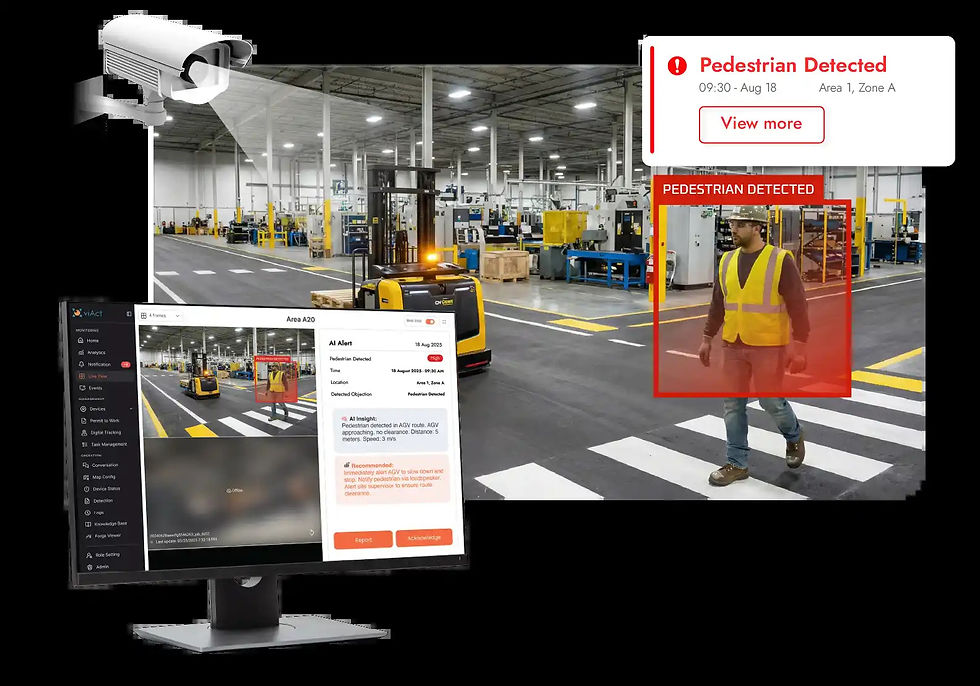
Industrial and infrastructure construction sites in Vietnam often involve excavators, dump trucks, concrete mixers and other heavy equipment operating near workers. Limited visibility, reversing vehicles and poorly separated traffic routes increase collision risks. Section 2.5 of QCVN 18:2021/BXD addresses construction machinery used for transporting materials, excavation and roadworks.
Preventive measures: Separate pedestrian and vehicle routes, control reversing movements, and provide suitable warning systems.
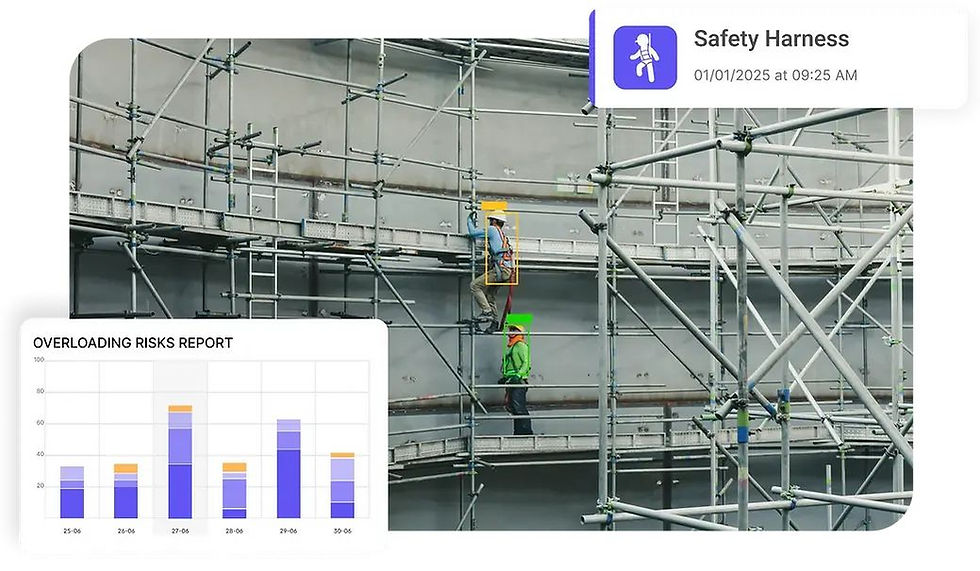
Scaffolding and temporary support structures are essential for Vietnam's multi-storey concrete construction projects. Improper assembly, overloading and unstable foundations can lead to structural failure. Sections 2.2 and 2.3 of QCVN 18:2021/BXD establish safety requirements for scaffolding, ladders and temporary supporting structures.
Preventive measures: Ensure proper structural design, competent installation, regular inspections and compliance with loading limits.

Basement construction, underground utilities and infrastructure projects in Vietnam involve excavation work that may expose workers to soil collapse, flooding and restricted access. Heavy rainfall can further complicate excavation safety, particularly during the monsoon season. Section 2.8 of QCVN 18:2021/BXD covers excavation, earthworks and underground construction activities.
Preventive measures: Assess ground stability, provide suitable excavation support, manage water accumulation and establish safe access and emergency procedures.
Electrical and Machinery Hazards
Temporary power distribution, welding equipment and construction machinery create electrical and mechanical hazards, particularly in outdoor worksites exposed to rain and moisture. Section 2.16 of QCVN 18:2021/BXD addresses electrical safety during construction activities.
Preventive measures: Inspect temporary electrical installations, protect exposed cables, maintain equipment guarding and implement appropriate electrical isolation procedures.
Although physical controls and inspections remain essential, site conditions can change between supervisory checks. AI video analytics and other digital monitoring technologies can provide additional visibility into selected unsafe activities and help contractors respond to recurring construction hazards.
What Technologies Are Used for Construction Site Safety Monitoring in Vietnam?
Construction site safety monitoring in Vietnam increasingly combines AI video analytics, CCTV and drone monitoring, IoT sensors, smart wearables, vehicle safety systems and digital safety platforms. These technologies help contractors monitor high-risk activities, including work at heights, lifting operations, vehicle movement, scaffolding, excavation and electrical work.
Technology | Application in Construction Safety |
AI CCTV Monitoring | Monitoring crane lifting areas, site entrances, scaffolding access points and equipment movement. |
Drone Monitoring | Inspecting elevated structures, excavation boundaries and large infrastructure construction sites. |
AI Video Analytics | Detects selected hazards, including unsafe climbing behaviour, workers near unprotected edges, lifting zone intrusions and PPE violations, generating automated safety alerts. |
IoT and Environmental Sensors | Monitors hazardous gas concentrations in confined spaces, water levels in excavations and environmental conditions that may affect worker safety. |
Smart Wearables | Supports worker monitoring for heat stress, fatigue, falls and emergency situations during physically demanding construction activities. |
Vehicle Safety System | Detects vehicle–pedestrian proximity, blind spots, unsafe reversing movements and operator fatigue around excavators, dump trucks and other heavy machinery. |
Centralised Management Platform | Centralises hazard alerts, scaffold inspection records, lifting safety observations, electrical safety inspections and corrective actions to support construction safety compliance. |
These technologies complement the preventive measures required under QCVN 18:2021/BXD, helping contractors improve hazard visibility and safety monitoring across Vietnam's high-rise, industrial and infrastructure construction projects.
What Are the Key Applications of AI in Construction Site Safety in Vietnam?
AI construction safety systems can identify selected visible hazards, including PPE violations, unsafe work-at-height activities, lifting zone intrusions and vehicle–pedestrian interactions.
The specific detection capabilities depend on the deployed AI models, camera coverage and site conditions.
PPE Compliance Monitoring: Detects missing safety helmets and high-visibility vests in construction areas.
Work-at-Height Monitoring: Detects workers entering unprotected edges and designated fall-risk zones.
Lifting Safety Monitoring: Detects workers entering crane exclusion zones or approaching suspended loads.
Vehicle–Pedestrian Detection: Identifies unsafe proximity between workers and moving excavators, trucks or heavy machinery.
Scaffolding Safety Monitoring: Detects unsafe scaffold climbing behaviour and unauthorised access to restricted scaffolding areas.
Restricted Area Monitoring: Detects unauthorised entry into excavation zones, confined-space access points and electrical hazard areas.
Housekeeping Monitoring: Identifies blocked walkways, improperly stored materials and visible obstructions in designated work areas.
AI video analytics can process live CCTV footage to identify predefined unsafe events and generate alerts for safety teams.

For example, when a worker enters a designated danger zone near an operating excavator, the system can flag the event and notify the responsible supervisor. AI can also record repeated unsafe interactions, helping safety teams identify locations that require stronger traffic controls or additional supervision.
However, AI video analytics cannot detect every hazard. Its effectiveness depends on camera visibility, detection accuracy and appropriate human response.
How Can Contractors Implement AI-Powered Construction Site Safety Monitoring?
Contractors can implement AI-powered construction safety monitoring by identifying priority hazards, evaluating CCTV infrastructure, selecting appropriate detection capabilities and establishing procedures for responding to alerts.
A practical implementation process involves five steps.
Step 1: Assess Existing Site Infrastructure
Review the availability and condition of CCTV cameras, camera positioning, lighting, power supply, network connectivity and existing safety management systems. Determine whether additional cameras, edge-processing devices or network improvements are necessary.
Step 2: Define Monitoring Requirements and Performance Criteria
Identify the areas where additional monitoring is needed and establish measurable objectives for the pilot. These may include detection performance, false-alert frequency, alert delivery time, supervisor response time and system availability.
Step 3: Configure and Test AI Monitoring
Install or connect the selected system, configure detection zones and alert conditions, and test performance during representative site operations. Evaluate whether the system can distinguish relevant unsafe events from routine construction activity.
Step 4: Establish Alert and Corrective-Action Workflows
Assign responsible personnel to receive and verify alerts, investigate confirmed unsafe activities and document corrective actions. Define escalation procedures for critical events and ensure monitoring information is incorporated into existing safety management processes.
Step 5: Review Performance Before Scaling Deployment
Analyse pilot results, including detection accuracy, recurring alerts, response times and unresolved corrective actions. Adjust camera coverage, detection rules or operating procedures where necessary before expanding the system to additional construction areas.
A 50% reduction in Total Recordable Incident Rate (TRIR) was reported across viAct construction deployments during FY2024–FY2025, covering more than 32,000 workers across 400-plus construction sites. These global results highlight how AI-powered safety monitoring can support hazard identification, proactive interventions and incident prevention.
Conclusion: Key Takeaways
Construction site safety in Vietnam requires contractors to combine regulatory compliance, preventive safety measures and effective monitoring throughout construction activities.
AI improves visibility between site inspections: Construction activities change throughout the day, and AI monitoring helps supervisors identify selected unsafe conditions that may otherwise go unnoticed between routine checks.
Real-time alerts support faster intervention: Instead of relying only on incident reports, safety teams can receive alerts, verify unsafe events and take corrective action while work is ongoing.
Repeated detections reveal underlying safety problems: AI-generated records help identify recurring hazards in particular work zones, allowing contractors to address issues such as ineffective barriers, unsafe access routes or inadequate supervision.
Connected monitoring supports better site coordination: Combining AI video analytics with CCTV, IoT sensors and centralised dashboards helps safety teams review different risk signals across busy construction environments.
AI delivers value when insights lead to action: For construction projects in Vietnam, successful AI adoption depends on reliable detection, clear supervisor responsibilities and regular evaluation of corrective actions, rather than the number of alerts generated.
The future of construction site safety in Vietnam lies in combining established safety practices with intelligent monitoring technologies to create more proactive, connected and prevention-focused worksites.

Quick FAQs
1. What are the main construction site safety regulations in Vietnam?
Construction site safety in Vietnam is primarily governed by the Law on Occupational Safety and Health No. 84/2015/QH13, the Construction Law and QCVN 18:2021/BXD. These establish requirements for hazard prevention, worker protection, equipment safety, work at heights and construction site safety management.
2. Can AI construction safety monitoring work with existing CCTV cameras in Vietnam?
Yes. AI construction safety monitoring can use compatible existing IP CCTV cameras that support RTSP video streaming and provide adequate image quality. Contractors can process video through edge devices, on-premises servers or cloud infrastructure without necessarily replacing their entire CCTV network.
3. How accurate is AI video analytics in detecting construction site hazards?
AI video analytics accuracy depends on the detection model, camera positioning, lighting, visibility and site conditions. A properly configured system can identify predefined hazards such as PPE violations, restricted-zone entry and unsafe vehicle–pedestrian proximity. Contractors should evaluate detection accuracy and false alerts through a site-specific pilot before full deployment.
4. Can viAct provide AI-based safety monitoring for construction projects in Vietnam?
Yes. viAct AI-powered construction safety solutions can be deployed for compatible construction site environments in Vietnam to monitor PPE compliance, lifting exclusion zones, work-at-height hazards and vehicle–pedestrian interactions. The platform supports cloud, on-premises and hybrid deployment options, with automated alerts and centralised incident reporting. Deployment suitability depends on site infrastructure, connectivity and project requirements.
5. How can contractors evaluate it before full deployment?
Contractors can begin with a proof of concept (POC) covering selected cameras and high-risk activities, such as crane lifting or excavator–pedestrian interactions. The pilot should assess detection accuracy, false alerts, response times, camera compatibility and monitoring effectiveness before expanding the system across the construction site.
Read more:


